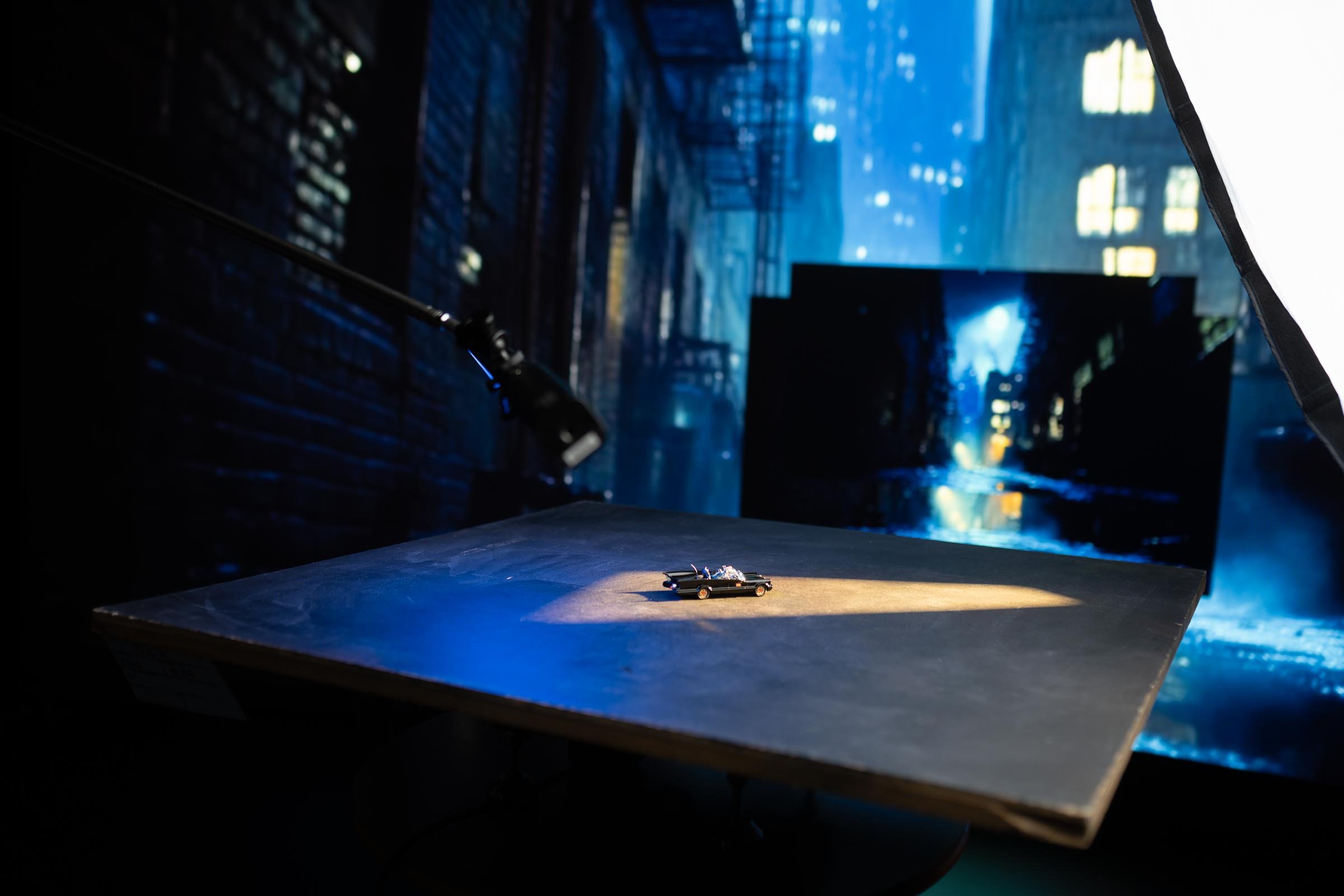
Case Study: Bringing the 1966 Corgi Batmobile Back to Life with Motion Control and Virtual Production
Overview
Lightstruck Digital approached us to help create a hero film for their client, Corgi Model Club, celebrating the re-issue of the iconic 1966 Corgi Batmobile — a 1:50 scale die-cast model (125mm x 47mm x 35mm).
They wanted a miniature commercial with a cinematic punch, blending nostalgia with modern filmmaking techniques.
To make that happen, we teamed up with the virtual production facility at Windsor College, using their LED volume to add scale, realism and flexibility to the shoot.
The Creative & Technical Challenge
Miniatures are unforgiving. Every reflection, every shadow and every camera move reveals the scale of the model, so controlling the environment is crucial.
The brief called for cinematic energy, believable environments and high-end visuals, all while keeping the entire shoot contained indoors.
So the big challenge was:
How do we make a 125mm-long Batmobile feel like the real deal without building multiple physical sets?
Our Approach
We combined virtual production, motion control, and a custom miniature stage to blend physical realism with digital flexibility.
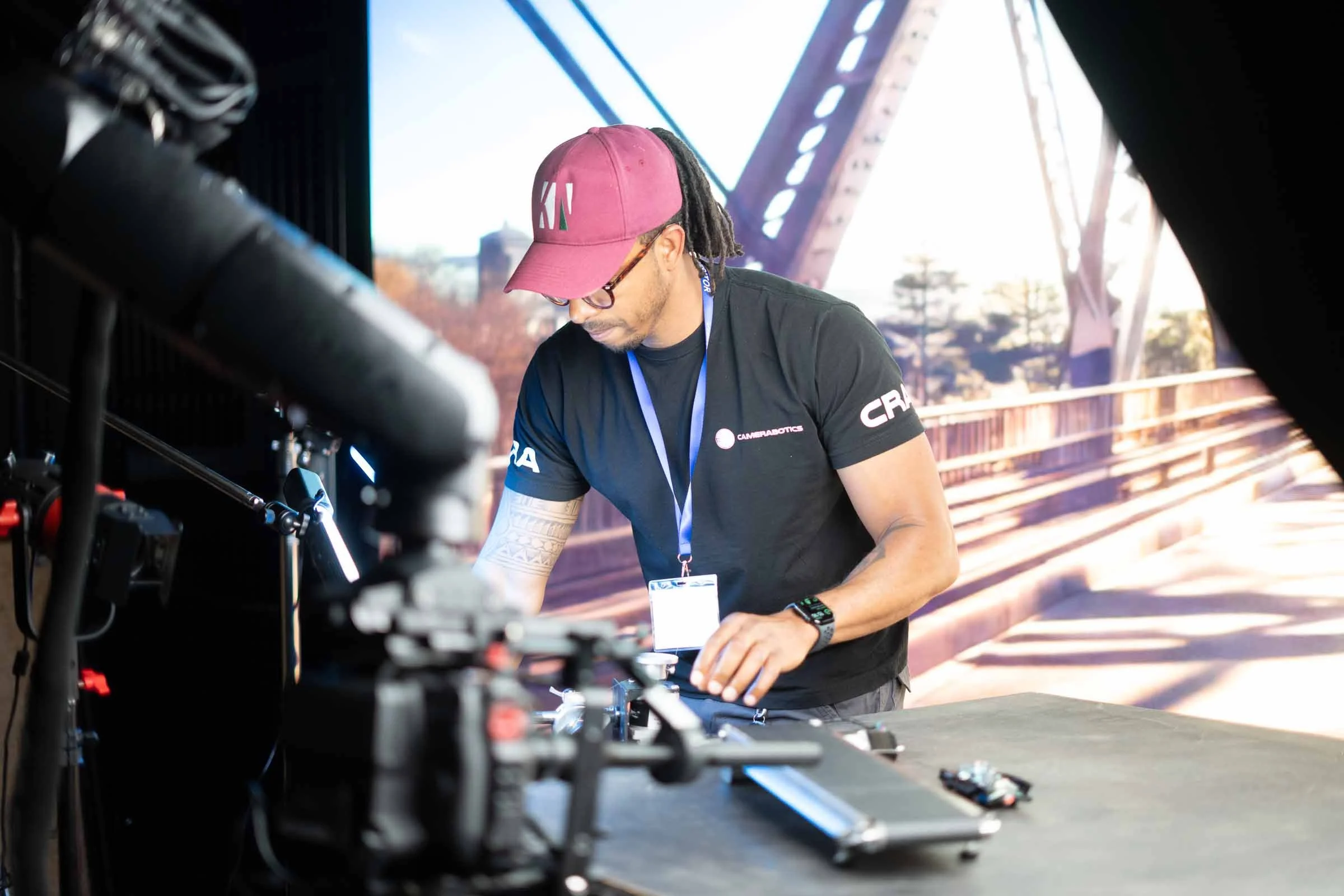
1. Virtual Production at Windsor College
The LED wall gave us:
Realistic reflections across the Batmobile’s glossy surfaces
Atmospheric backgrounds for city streets, tunnels, and abstract light runs
Instant environment switching — a massive time-saver
Colour and light interactions that matched the model perfectly
Using VP mainly as a “reflection generator” and mood builder helped lock the miniature into each environment without heavy post work.
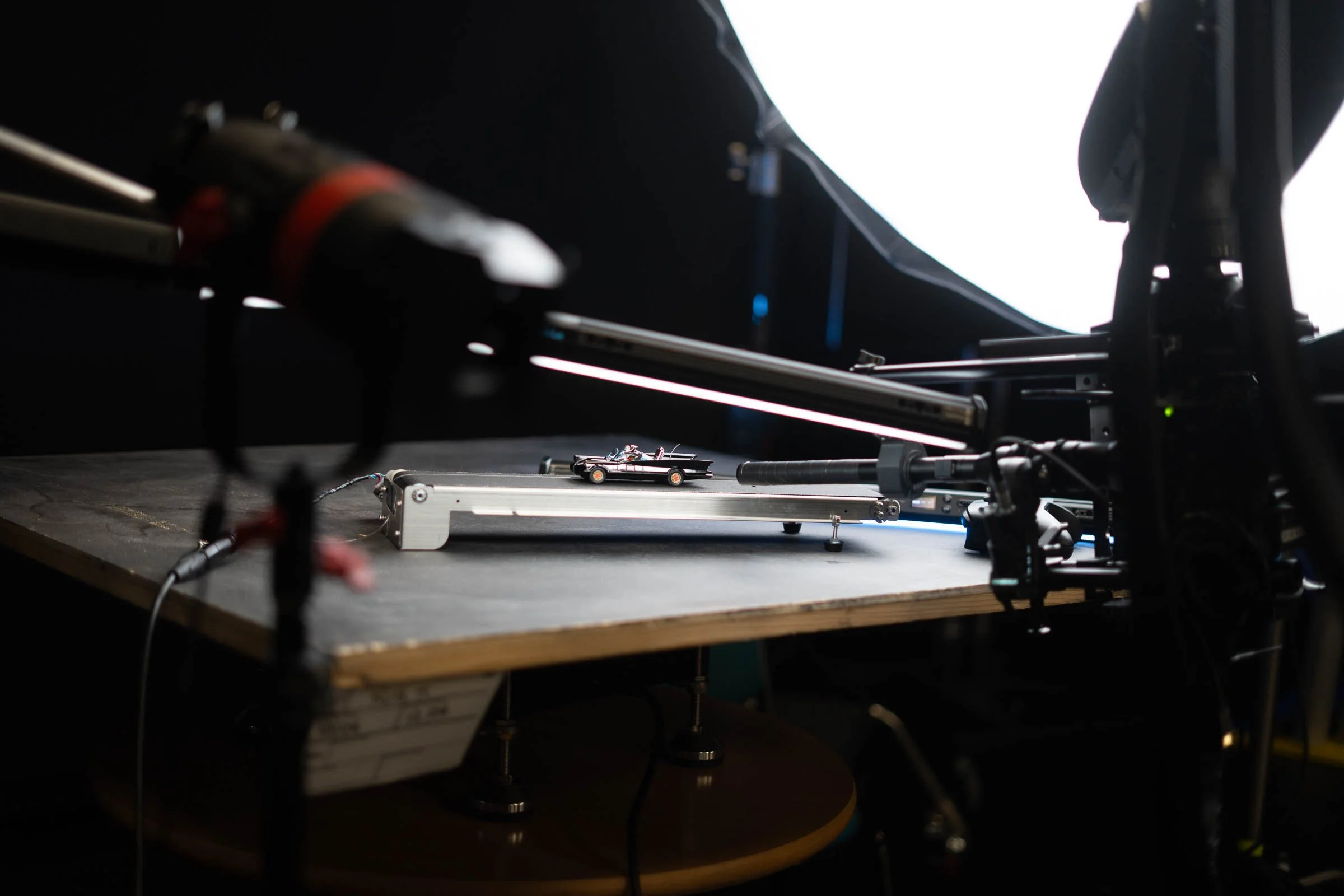
2. A Stage Built for Miniature Motion
To create natural movement and sell the illusion of full scale, we used:
A motion-controlled turntable for precise spins and hero rotations
A motorised conveyor system acting as a rolling road
Swap-out foreground surfaces matched to the VP backgrounds
This combination meant the model didn’t just look right — it moved right.
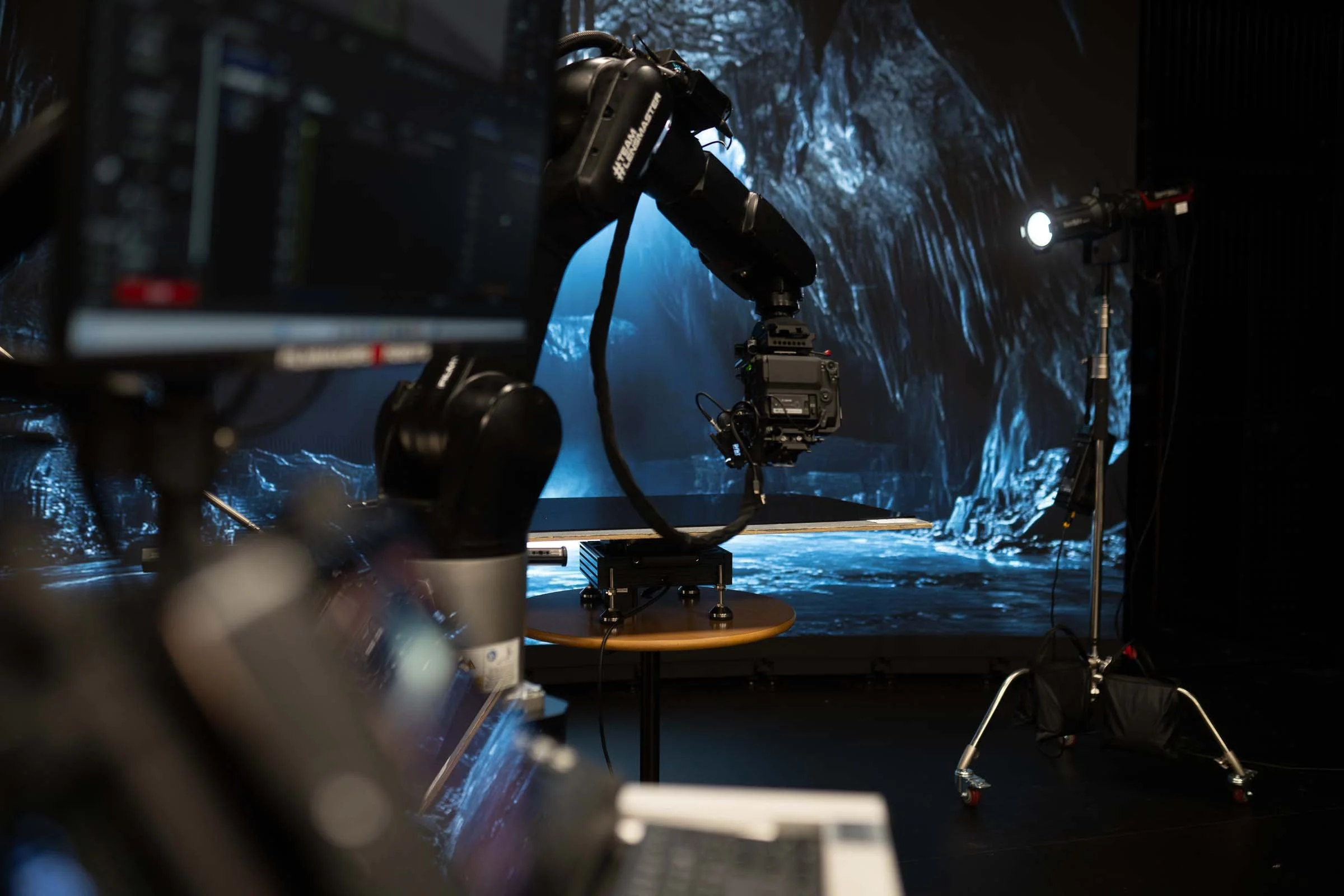
3. Motion Control for Cinematic Shots
Our robot arm handled all the signature camera moves:
tight passes, sweeping arcs, rising reveals and locked-in repeatable moves.
This gave us:
Smooth, dynamic shots that feel oversized and dramatic
Precise repeatability for multi-pass setups
Total control over speed, parallax and scale cues
The robot was a key factor in giving the miniature a full-sized presence.
Execution
We cycled through multiple environments on the LED wall, pairing each one with the right surface texture and choosing either the conveyor or the turntable depending on the shot.
The flexibility of VP paired with the precision of motion control meant we could quickly refine camera paths, adjust lighting, and preview results in real-time — a huge advantage for both us and Lightstruck Digital during the shoot.
Client Response
Lightstruck Digital were genuinely impressed with how seamlessly the technical elements came together — from the reflections off the LED wall to the smooth robot-driven shots and the time saved by rapid environment changes.
Their client, Corgi Model Club, received a film that felt true to the legacy of the 1966 Batmobile while presenting it with modern production values.